Walk into most kitchens and you'll hear "sprouts" and "microgreens" used interchangeably. They come from similar seeds, they're both eaten young, and they both promise a fresher, greener plate. But the two are grown, harvested and eaten at very different stages — and that difference matters.
Where the timeline splits
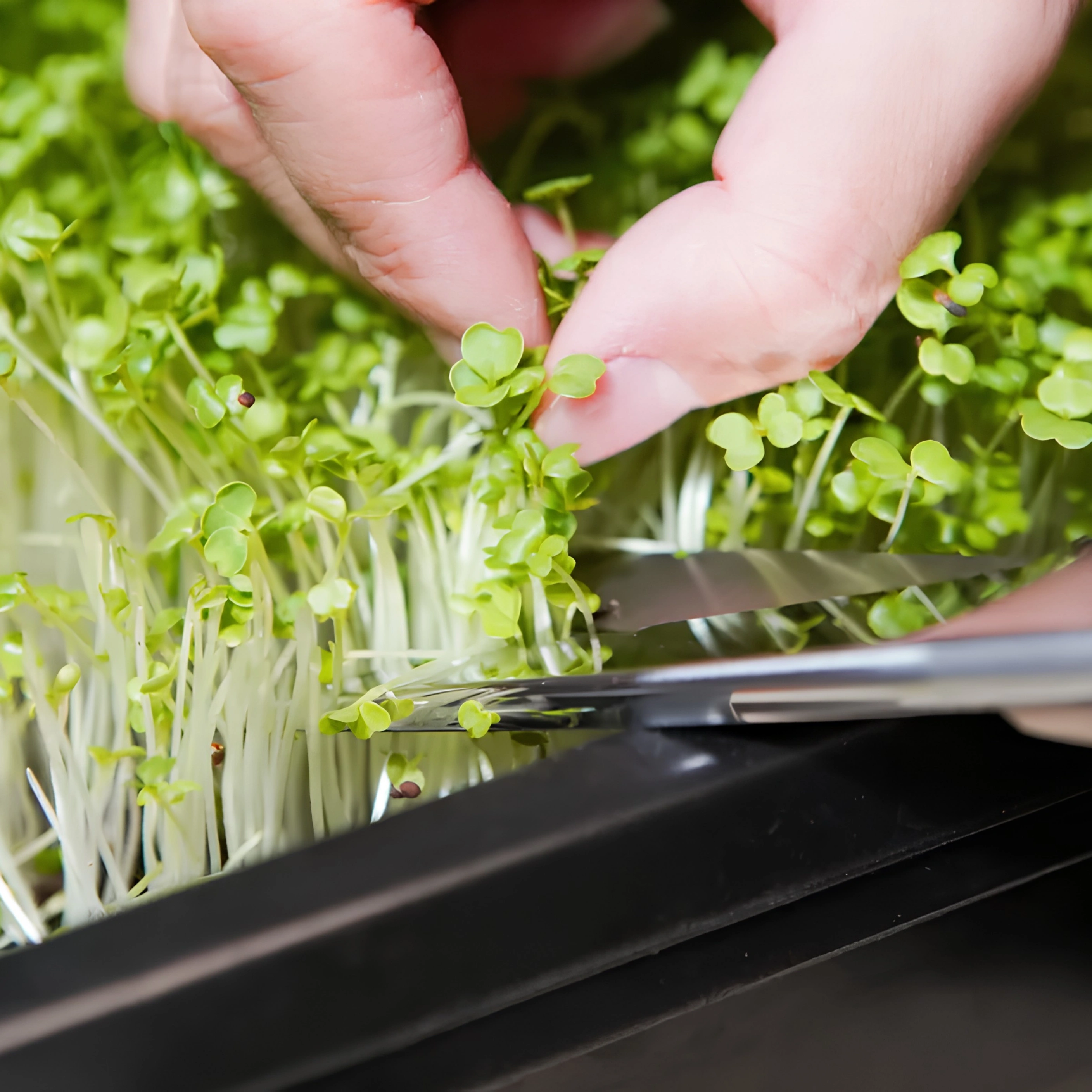
Sprouts are harvested within a day or two of germination, roots and all, and are usually eaten whole — seed casing included. Microgreens are grown further: past germination, through a blackout phase, and into several days of growth under light, until the first true leaves (cotyledons) fully unfurl. Only the stem and leaf are harvested; the root and growing medium stay behind.
Why the extra days matter
Those additional days under light are where colour, flavour and much of the nutrient concentration develop. A radish microgreen carries the same peppery character as a mature radish, just concentrated into a few centimetres of stem and leaf. It's also why we track every batch by its "ready-to-harvest" signal — fully open cotyledons and firm, healthy stems — rather than by the calendar alone.
What this means at Thanikan Farms
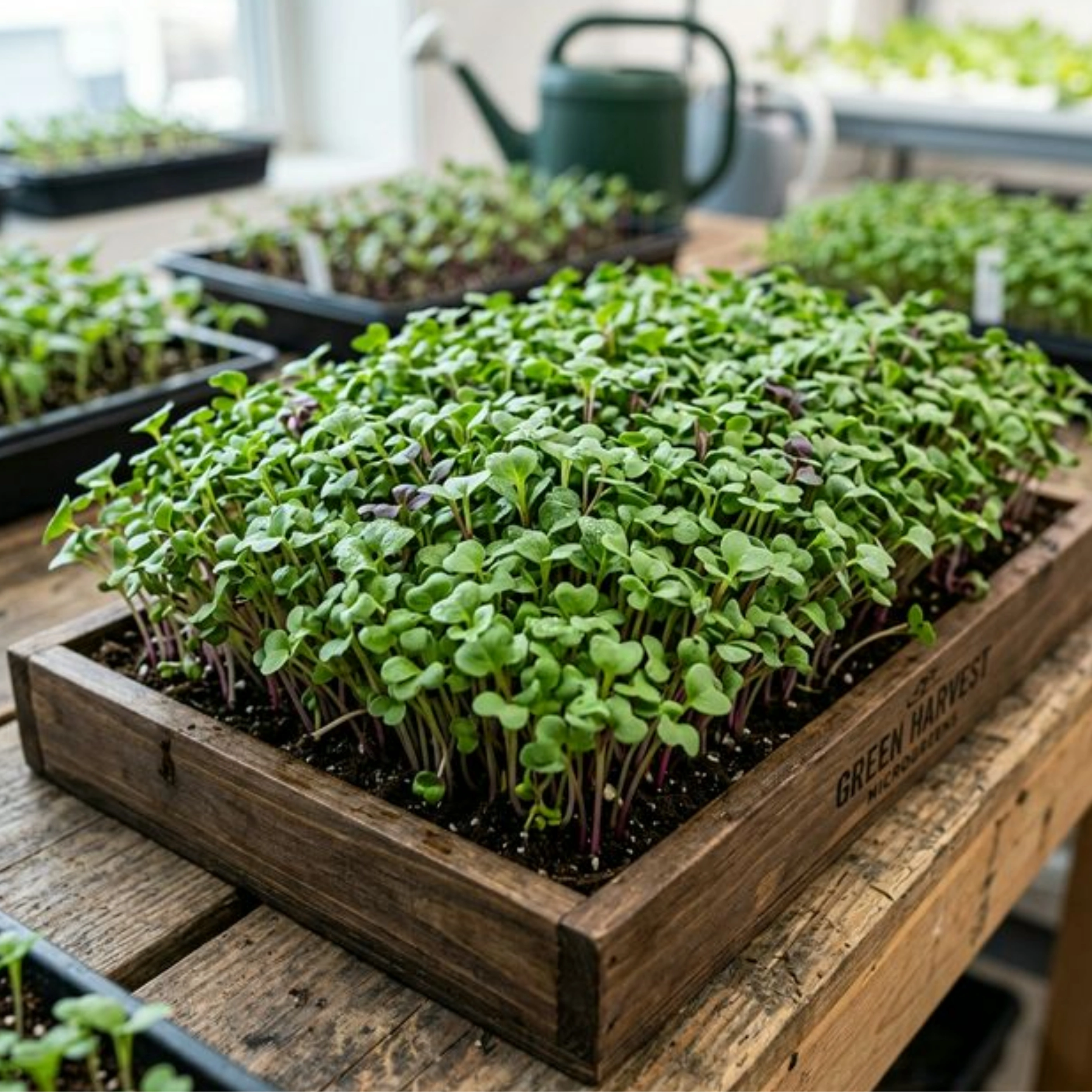
Every variety we grow — from Radish to Broccoli to Sunflower — follows its own germination and growth timeline before it's cleared for harvest. That's the whole idea behind the "Growing / Ready to Harvest" status you'll see on each product: it's not decoration, it's exactly where that tray is in its cycle.